Algorithmic Composition for Classical Guitar Equipped
with MIDI Pickup
Abstract
The conference Algorithmic Composition for Classical Guitar Equipped with MIDI Pickup explores the concept of digital extension through the implementation of a MIDI ecosystem for the acoustic instrument, approached from two complementary perspectives: electroacoustic lutherie and performance practice.
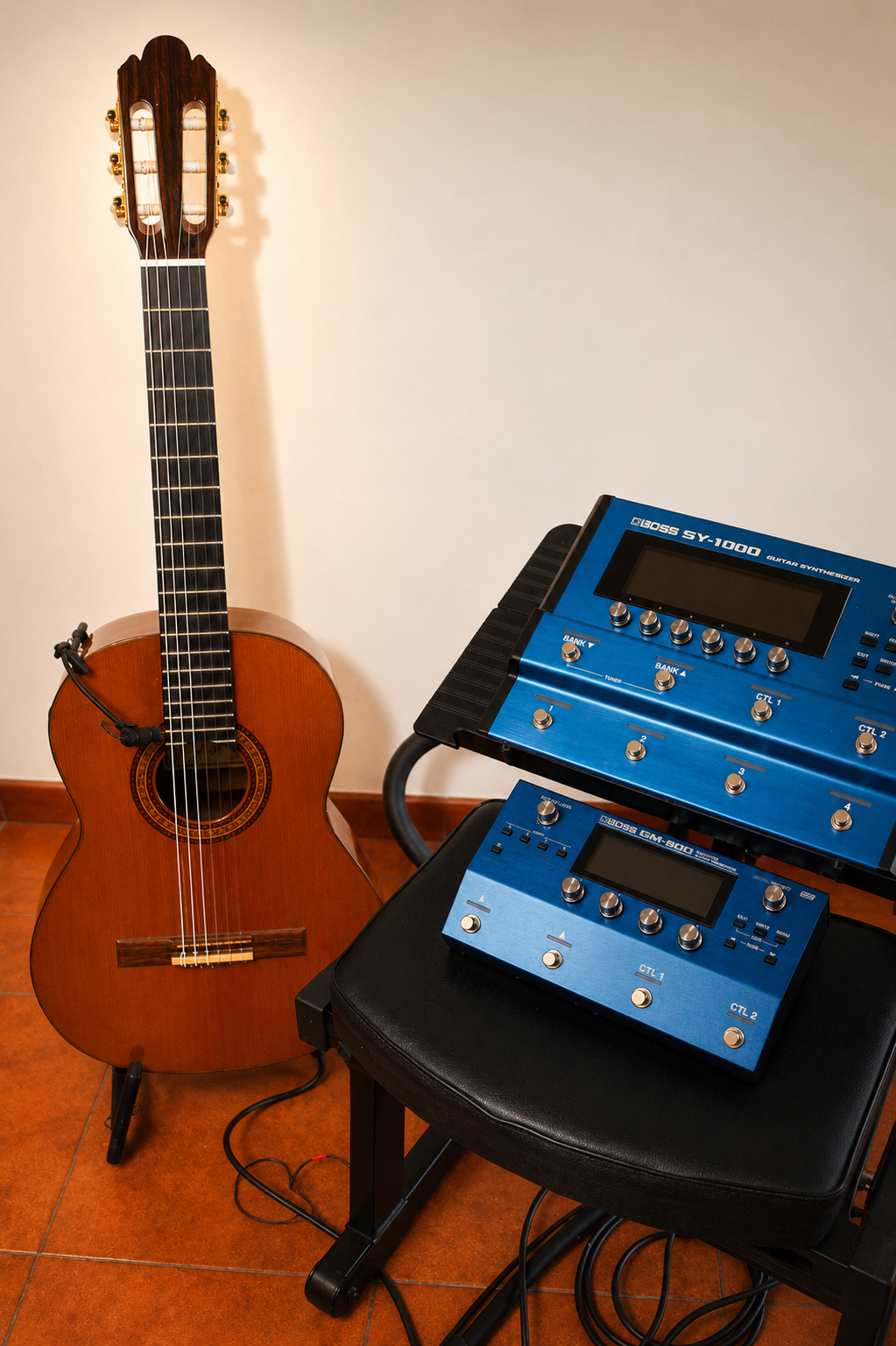
The first axis focuses on the development of a reliable technological chain for the classical guitar, beginning with the pioneering work of RMC pickup designers in the 1990s, among the first to conceive hexaphonic piezo systems intended not only for MIDI conversion, but also for preserving timbral balance, dynamic consistency, and fidelity to the instrument’s acoustic response. The use of under-saddle piezo pickups enables the independent reading of all six strings, allowing stable signal transmission to pitch-to-MIDI converters. Within this framework, the principal conversion systems are examined, culminating in contemporary devices such as the Boss SY-1000 (2019). Through the management of six independent channels, the MIDI protocol allows advanced polyphonic control, opening compositional possibilities that are difficult to achieve with traditional instrumental configurations.
The second axis is devoted to guitar performance practice, which remains central and is not supplanted by technology. Instrumental gesture maintains its direct relationship with sound production: string attack, dynamic response, soundboard vibration, and the temporal trace of the acoustic sound constitute the primary material from which digital data are derived. The MIDI system does not mediate timbre; rather, it extracts information from the instrument’s actual vibration, preserving continuity between performance, perception, and algorithmic control.
Finally, the conference addresses the multidimensional interaction between instrument, computer, and software, with particular reference to historical environments for sound synthesis and computer-assisted composition such as Csound (1980s) and Max/MSP (1990s). The presentation concludes with the analysis and listening session of an original composition (Stefano Petrarca, 2026) for classical guitar equipped with MIDI pickup and Max/MSP, serving as a concrete example of the integration of acoustic instrument, performance practice, and algorithmic composition.
1. HISTORY
1.1
Historical Introduction: The Emergence of the Hexaphonic Pickup
»
1.2 The
Piezoelectric Transducer
»
1.3 The
Role of the Pickup in Pitch-to-MIDI Conversion
»
1.4
Hexaphonic MIDI Pickup with GTM-6 System
»
1.5
GK-2 Hexaphonic Pickup and 13-Pin Interface
»
2. LUTHERIE AND MIDI DEVICES
2.1
Classical Guitar Lutherie with Integrated MIDI Pickup
»
2.2 The
RMC Polydrive System
»
2.3
Roland Converters: BOSS SY-1000 and BOSS GM-800
»
2.4
Latency
Test
»
3. MIDI AND LIVE ELECTRONICS
3.1 The
MIDI System in Algorithmic Music: Hardware and Software
»
3.2
Works for Guitar with MIDI Instrumentation
»
3.3 The Csound~ Environment with
csound~ Object and Max/MSP
»
3.4 Stefano Petrarca composition of MIDI
Guitar, SY 1000
e Csound~
»
Appendix
»
Bibliography
»
Poster
Session
»
Acknowledgements
»